
Sourcing textiles from China seems straightforward until you need complex customizations for a small test order. Recently, we successfully managed a highly specific sourcing project for an international fabric importer. The requirement? A 2.5-meter extra-wide custom quilted fabric featuring exclusive stitching patterns, but starting with a very small initial order volume.
Through this project, we want to share the real challenges of customizing textiles in China and how a professional sourcing strategy can turn an impossible request into a profitable reality for buyers and wholesalers worldwide.
1. The Reality of Textile Hubs and MOQ Barriers
China has massive textile manufacturing hubs, such as Nantong in Jiangsu province, which specializes in bedding and home textiles. However, approaching a direct factory in these hubs with a complex request and a low quantity (e.g., 150 to 200 meters) will almost always result in a flat rejection.
Why? Because the setup costs for custom quilting are high. A factory has to halt their machines, input digital patterns, run strike-offs (sample tests), and adjust the machine tension for extra-wide fabrics. For a stranger placing a small test order, factories simply cannot justify the machine downtime. They will either ignore the inquiry or quote an outrageous price because they would be operating at a loss.
2. Restructuring the Supply Chain for Small Test Orders
When factories refuse to cooperate, a professional sourcing agent doesn’t just give up. We solve the problem by restructuring the supply chain.
For this specific buyer, instead of looking for one factory to do everything, we split the manufacturing process. We first sourced the exact high-quality base fabric from a trusted raw material supplier. Then, we transported this base fabric to a specialized quilting factory. Because we have deep-rooted relationships and consistent order volumes with this quilting facility, we used our industry reputation to back the client.
Through our intensive communication, we helped the buyer secure the initial pattern-making (strike-off) at the lowest possible cost—an arrangement the factory accepted—and successfully negotiated the MOQ down. This custom supply chain approach allowed the importer to successfully launch their small test order to validate their market, while ensuring the factory still secured a profitable run.
3. Navigating Industry Traps and Quality Control
When importing fabrics, buyers often fall into several hidden traps if they don’t have eyes on the ground:
- Fake Materials: Many suppliers sell cheap polyester blends disguised as “Egyptian Cotton.” We protect our clients by conducting physical burn tests and verifying the actual GSM (grams per square meter) to ensure authenticity.
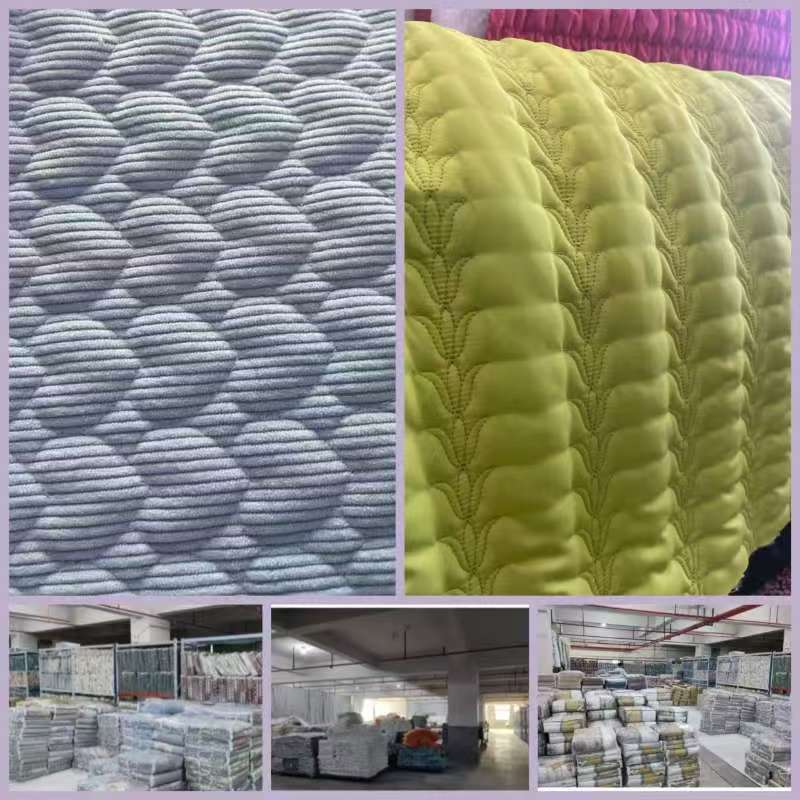
- Pattern and Stitching Inconsistencies: Custom quilting can easily pucker or mismatch the approved strike-off if the machine tension is wrong, especially on a 2.5m wide roll.
- Substandard Packaging: Fabrics shipped in cheap woven bags can suffer from moisture, mold, or physical tearing during long ocean transits.
To eliminate these risks, our team executed strict quality control processes right on the factory floor. We supervised the digital pattern input, checked the stitching tension, and ensured the final products were packed using heavy-duty, moisture-proof export packaging.
If you are an importer, wholesaler, or brand owner struggling to match your complex customization needs with factory realities, please reach out to our team today. Let our on-the-ground expertise and factory networks protect your investments and scale your business securely!